
What is a lumbar puncture?
A lumbar puncture (LP) is a test doctors do to check the fluid around the brain and spine. This fluid is called cerebrospinal fluid (CSF), and it helps protect the brain and spinal cord.
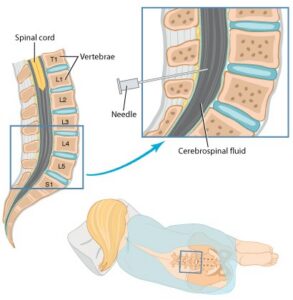
During the test, a doctor places a very small needle into the lower back (a safe area) to collect a tiny sample of this fluid (Figure 1).
Why do doctors do this test?
Sometimes doctors think a baby or child might have an infection. Blood tests can show signs of infection, but doctors also need to check if the infection has reached the brain. This is called meningitis.
Testing the CSF helps doctors find out if the brain is affected.
How is the test done?
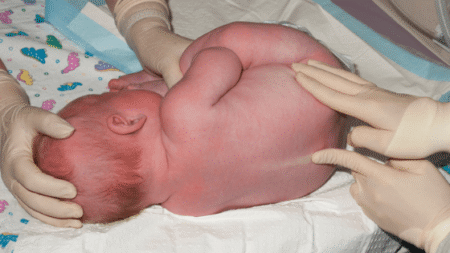
- The baby is gently held in a curled-up position to keep them still (Figure 2).
- The doctor cleans the skin on the lower back.
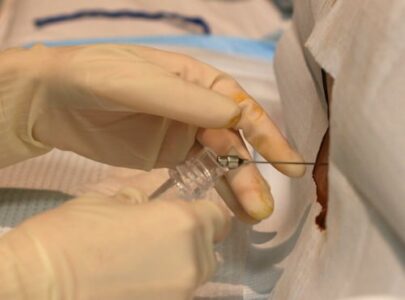
- A tiny needle goes between two bones in the lower spine to collect the CSF (Figure 3).
- The sample is sent to the laboratory straight away.
How long does it take?
The whole procedure usually takes about 30 minutes.
Can parents stay in the room?
Yes, parents can stay if they want to. Some parents prefer not to watch because it can feel upsetting, and that is completely okay.
Does it hurt?
It may feel uncomfortable, like having a blood test. Most babies cry because they don’t like being held still, not because of the needle.
Doctors give pain relief such as sucrose (a sweet liquid) or a pacifier to help keep the baby calm.
When will the results be ready?
- Some results come back within a few hours.
- The culture test, which checks for bacteria, takes 24 to 36 hours.
- A few special tests may take several days.
Are there any risks?
A lumbar puncture is a safe and routine procedure. Problems are rare, but can include:
- No sample collected (called a “dry tap”), so the test may need to be repeated.
- A very small chance of infection, but this is rare because doctors use sterile equipment and clean the skin carefully.
- A small amount of bleeding, which usually stops quickly with a dressing.
References
Image source:
Figure 1. UW Alzheimer’s Disease Research centre – Lumbar Puncture: FAQs and Myths
Figure 2. Don’t Forget the Bubbles – How to Perform a Lumbar Puncture.
Figure 3. ALiEM, PEM Pearls: Perfecting your paediatric lumbar puncture using ultrasound.